
Leads cost money.
If you are paying for Google or Meta (Facebook and Instagram) ads, you know that they can suck money out of your bank account really quickly.
You might also be paying for a combination of social media advertising, SEO, direct mail, referral programs, and lead-generation services.
If you are like most service-industry businesses, you are spending a lot of cash on leads. So, when someone finally raises his hand and says, "I'm interested," what happens next?
For many businesses, the answer is surprisingly unclear.
Best-case scenarios aren't a sales process
Best case, there happens to be a salesperson or receptionist available to take the call immediately. Great. But you cannot build a reliable sales process around someone always being available at exactly the right moment. Work often gets in the way of business.
Worst-case scenario…nobody responds at all.
Your customer will not wait for you
Potential customers want a response. They don’t like to wait. And they may call two other service providers immediately after calling you.
That makes response time part of the sales process.
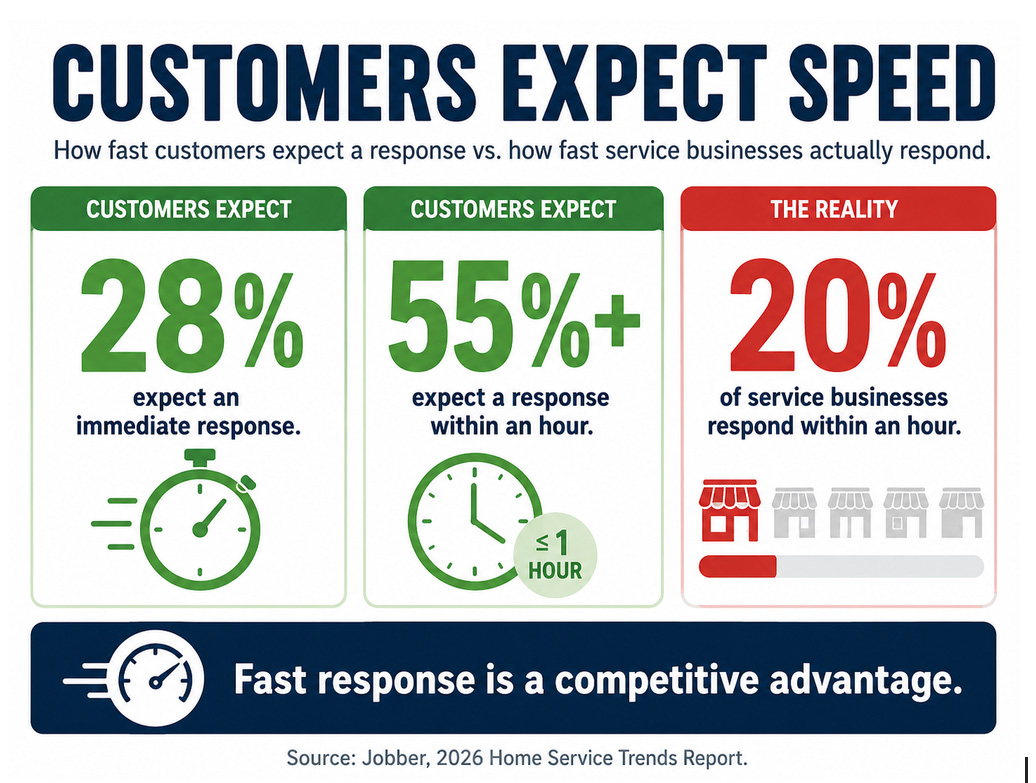
According to Jobber's survey of more than 1,000 U.S. home-service business owners for its 2026 Home Service Trends Report, more than 55% of customers expect a response within an hour, including 28% who expect an immediate response.
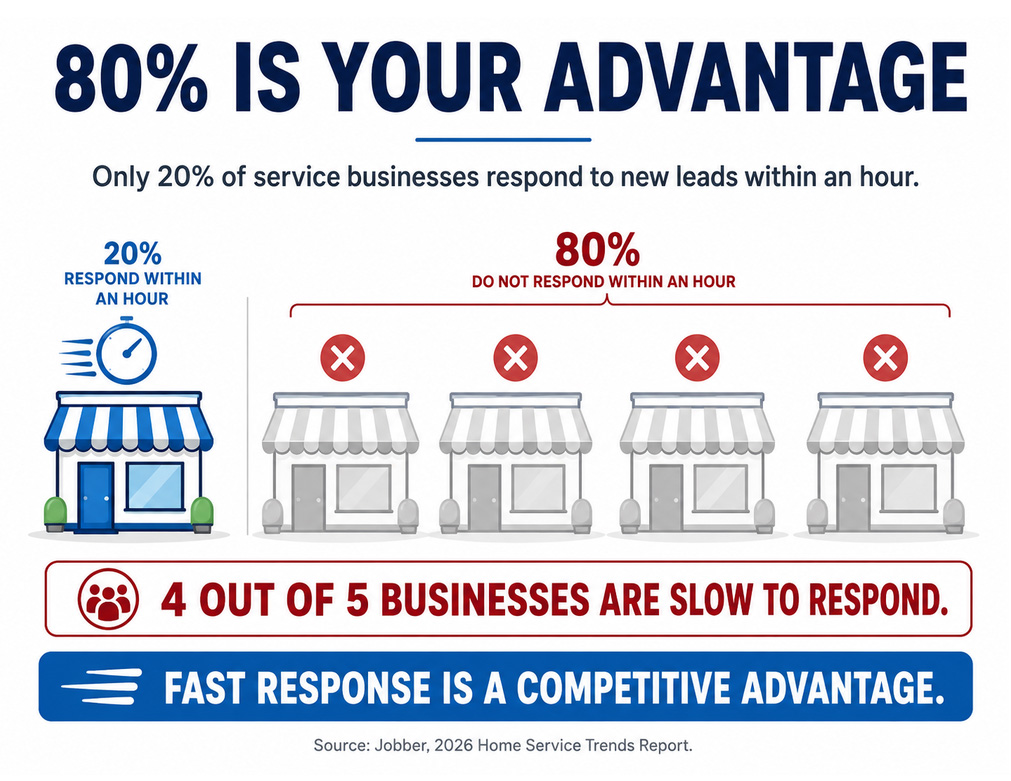
Only 20% of the businesses surveyed said they respond to new leads within an hour.
That means 80% do not. That 80% is your advantage.
That leaves a substantial gap between what customers expect and what many businesses deliver. You don't necessarily have to be cheaper than your competitor. You don't need a better website, a bigger ad budget, or another salesperson. Sometimes, you just have to answer the customer before the other guy does.
Interest is perishable. Speed translates into sales.
Responding quickly is not just a matter of customer service. It can affect whether the lead goes cold or becomes a customer.
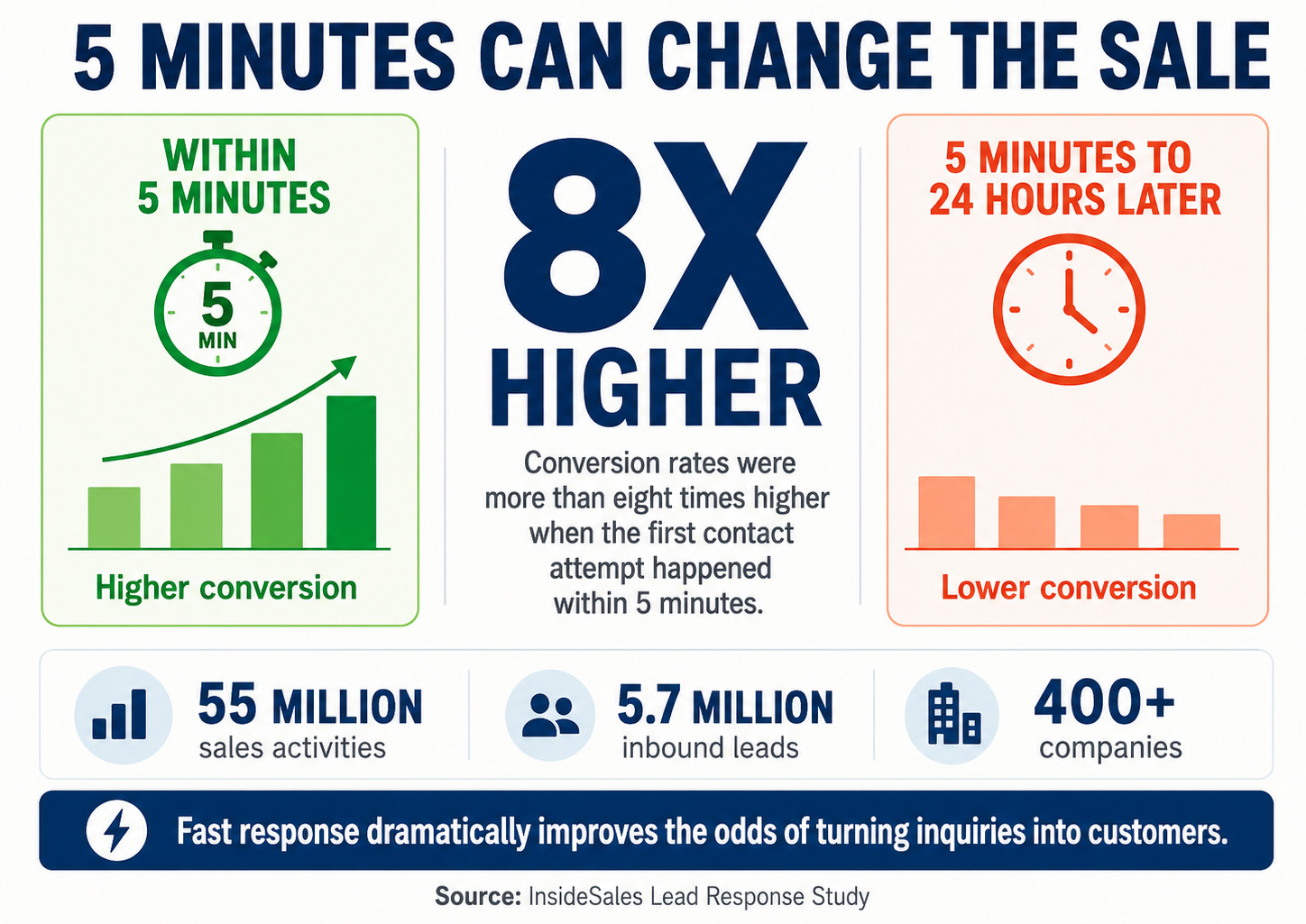
InsideSales examined more than 55 million sales activities involving 5.7 million inbound leads at more than 400 companies. The company found that conversion rates were more than eight times higher when the first contact attempt occurred within five minutes, compared with waiting between five minutes and 24 hours.
When someone contacts your business, the problem is on his mind. He is actively looking for information, comparing alternatives, or trying to make a decision.
In an hour, he may already be talking to somebody else.
The problem is usually the process, not the people
Companies do not intentionally ignore leads. That is business suicide.
What happens is that the salesperson is on the phone. The owner is working. The technician is at a jobsite. The office is closed. Someone writes down a phone number and plans to call back later…and then the day gets busy.
This is especially common in service businesses. But it isn’t limited to them.
Any company that relies on people to respond, follow up on a quote, send another email, or make another call can easily lose opportunities.
Even large companies struggle with it.
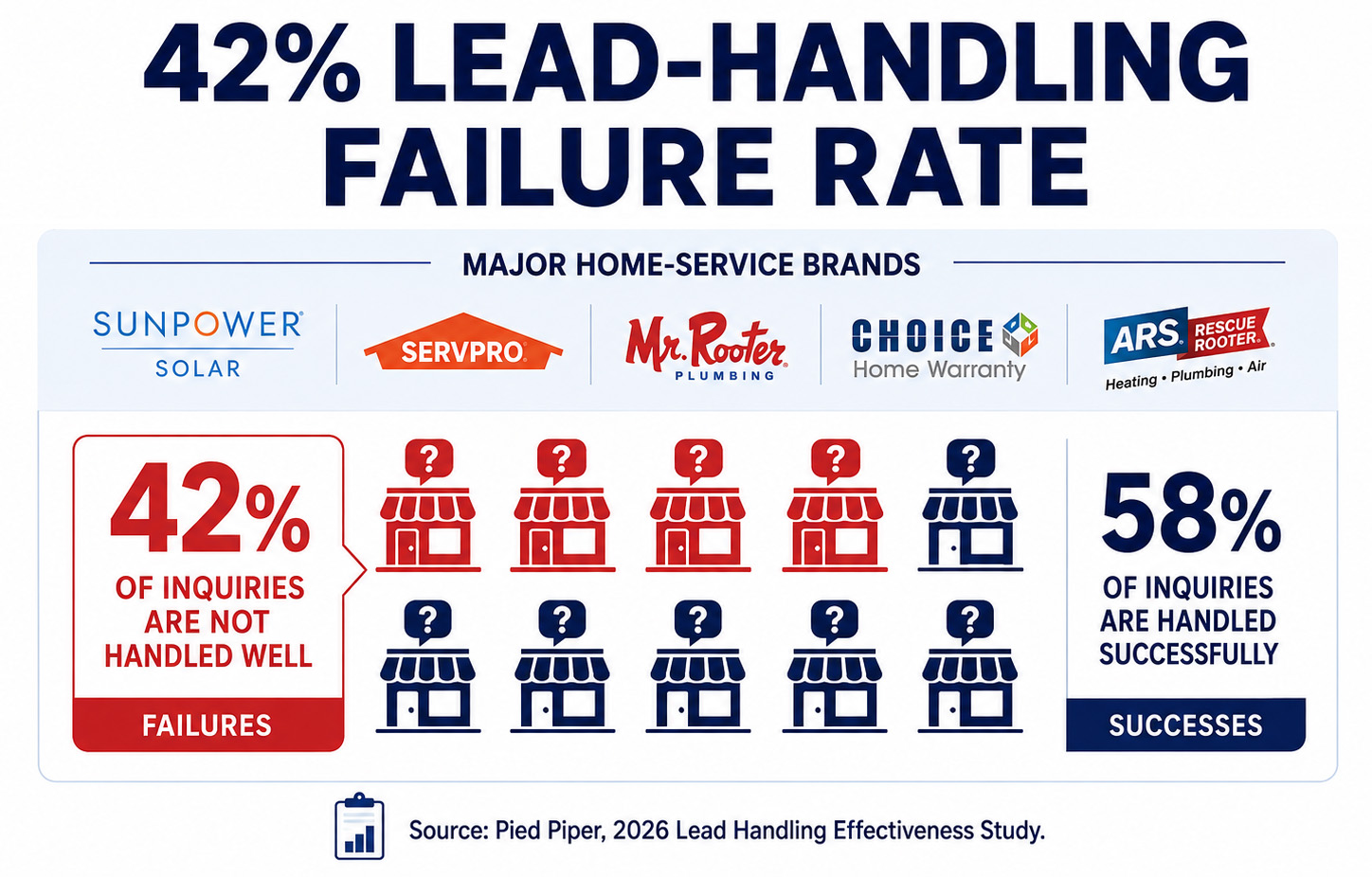
Pied Piper's 2026 study evaluated 3,211 locations operated by major home-service brands. Not tiny businesses operating from somebody's kitchen table. The study included major national and franchise brands. Researchers contacted the businesses by phone, chat, and web forms, then measured their responses and subsequent follow-up.
The study found an overall lead-handling failure rate of 42%.
What should happen when a new lead arrives?
The exact process will vary from business to business. But the principle is simple.
Every new inquiry should trigger a defined next step.
A good system should:
- acknowledge the customer's inquiry immediately,
- alert the right employee,
- add the opportunity to the sales pipeline,
- record communication, and
schedule follow-up. - continue appropriate follow-up until someone closes, disqualifies, or otherwise resolves the lead.
If the customer does not respond, the opportunity should not simply disappear because someone forgot about it.
This is where automation comes in.
Automation does not replace the salesperson or customer-service employee. It makes them more efficient and productive by handling the routine work.
A customer who submits a request at 9:00 p.m., for example, can immediately receive a text or email confirming the message was received. The appropriate employee can be notified, and the lead can automatically enter the company's follow-up process.
The customer gets a response. The employee knows what needs attention. And the opportunity does not depend entirely on somebody remembering what to do next.
Before you spend more money generating leads, let’s work on managing the ones you already have
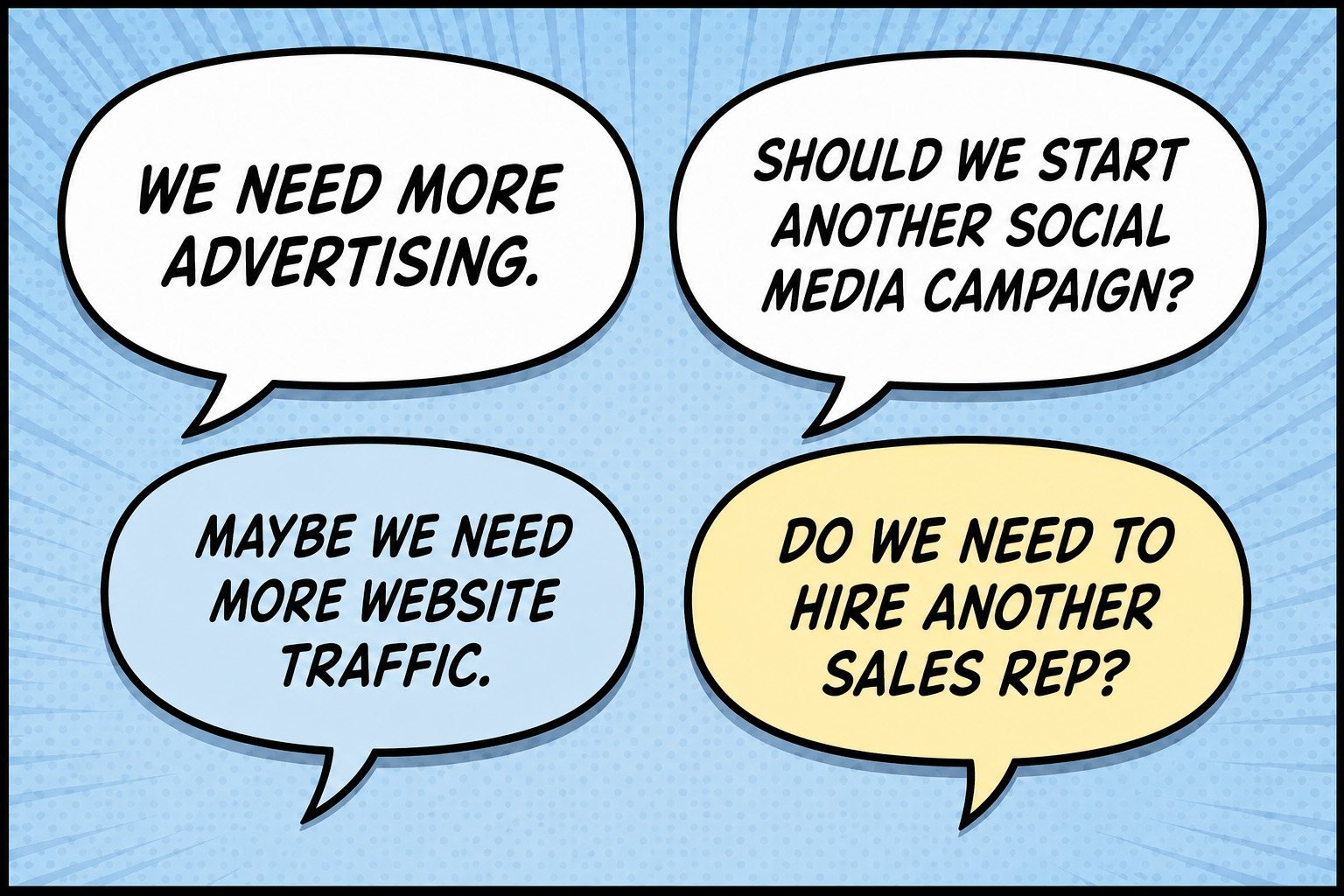
When sales slow down, businesses often look first at lead generation.
Sometimes. But often the answer to slow sales isn’t more leads. It’s maximizing the ones you have.
A company spending $3,000 a month generating inquiries does not get the full value of that investment if leads receive slow responses, estimates are not followed up on, missed calls go unanswered, and potential customers fall through the cracks.
Before spending more money to generate additional opportunities, it makes sense to determine how well you are handling the opportunities you already have.
Technology should make the sales process easier
80Twenty Connect gives businesses one place to manage leads, customer information, conversations, sales opportunities, and follow-up.
More importantly, it allows repetitive parts of the customer lifecycle to happen automatically.
The objective is to lose fewer opportunities.
If you are already paying to make the phone ring, generate website inquiries, attract referrals, or bring prospects into your sales process, the next question is simple:
What happens after the lead comes in?
If you do not have a consistent answer, that may be the first place to look for lost revenue.
If you are already paying to generate leads, make sure you have a reliable process for handling them.
80Twenty Connect helps businesses respond faster, keep opportunities visible, and automate the follow-up that too often gets forgotten.